 French
 German
 Spanish
 Italian
 Dutch
Dutch
 Chinese (Simplified)
Best Time to Visit Serengeti for the Great Migration
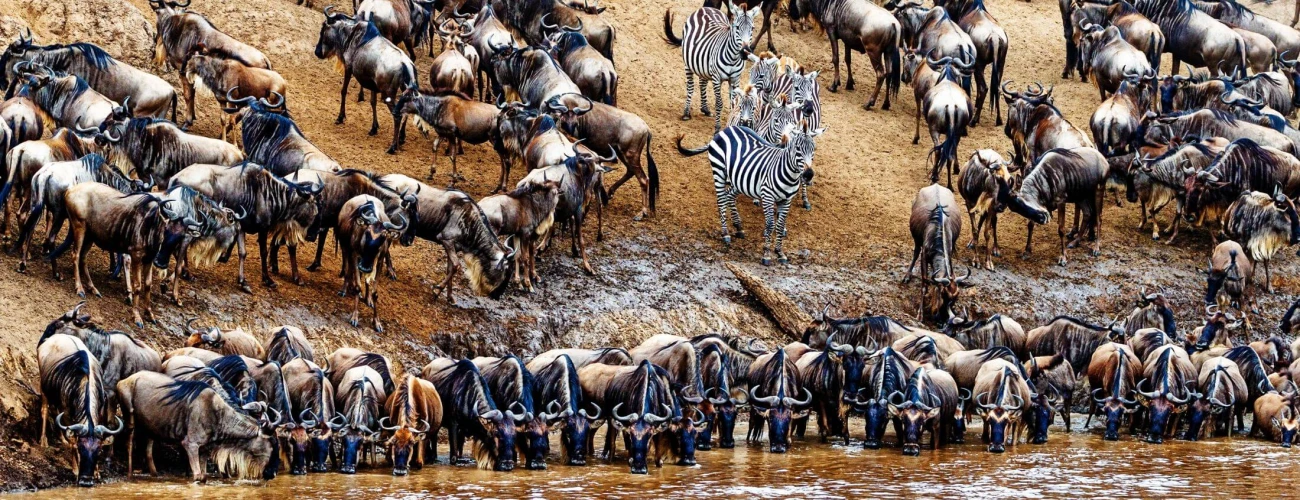
The Great Migration in Serengeti National Park is one of the most extraordinary wildlife spectacles on Earth. More than two million wildebeest, zebras, and gazelles move continuously across the Serengeti ecosystem in search of fresh grazing land and water.
What many travelers misunderstand is that the migration is not a single event happening in one place at one time. It is a year-round cycle that shifts across different regions of the Serengeti depending on rainfall patterns and grazing conditions.
Because of this movement, the “best time” to visit depends entirely on the specific migration experience travelers want to witness.
January to March: Calving Season in Southern Serengeti
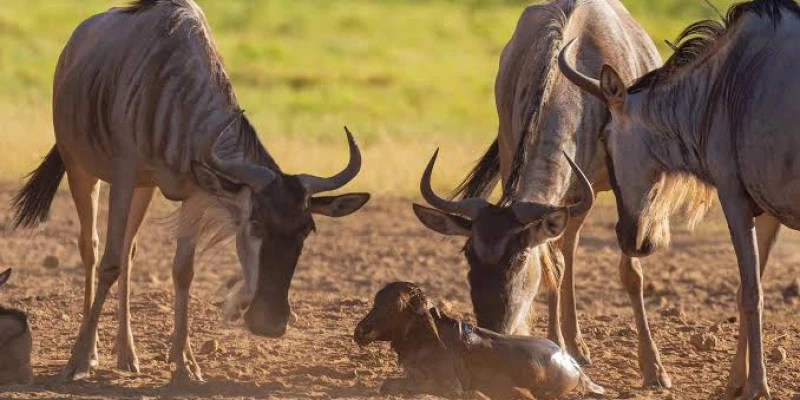
From January to March, the migration concentrates in the southern plains of the Serengeti and the Ndutu region.
This period is known as the calving season, when hundreds of thousands of wildebeest give birth within a short time frame. The scale is extraordinary, with thousands of calves born daily across the open plains.
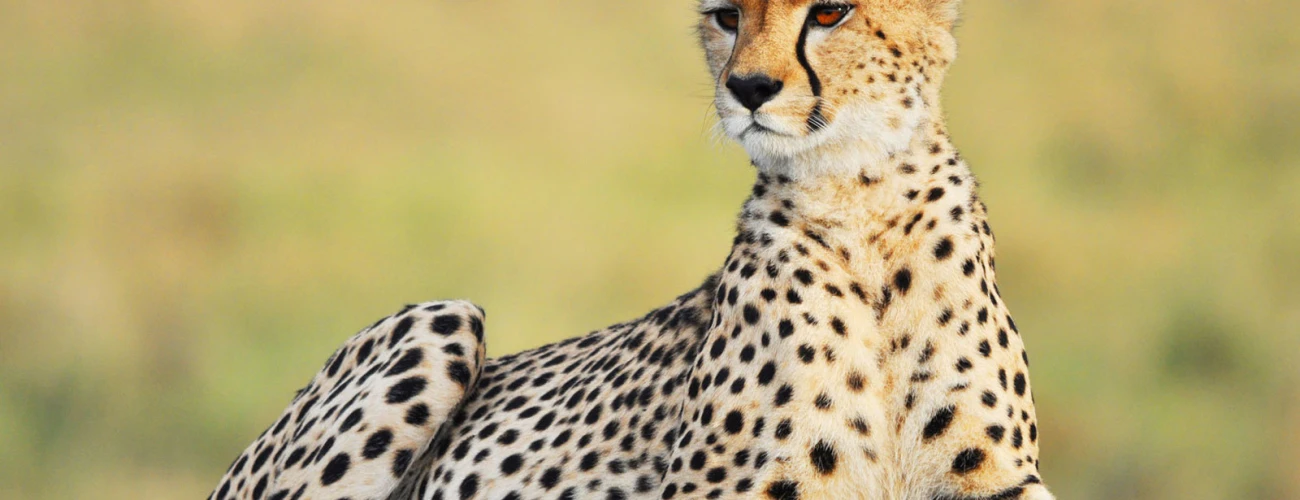
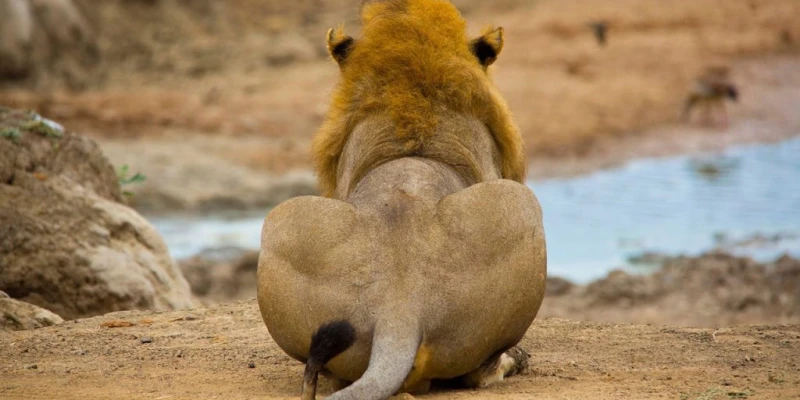
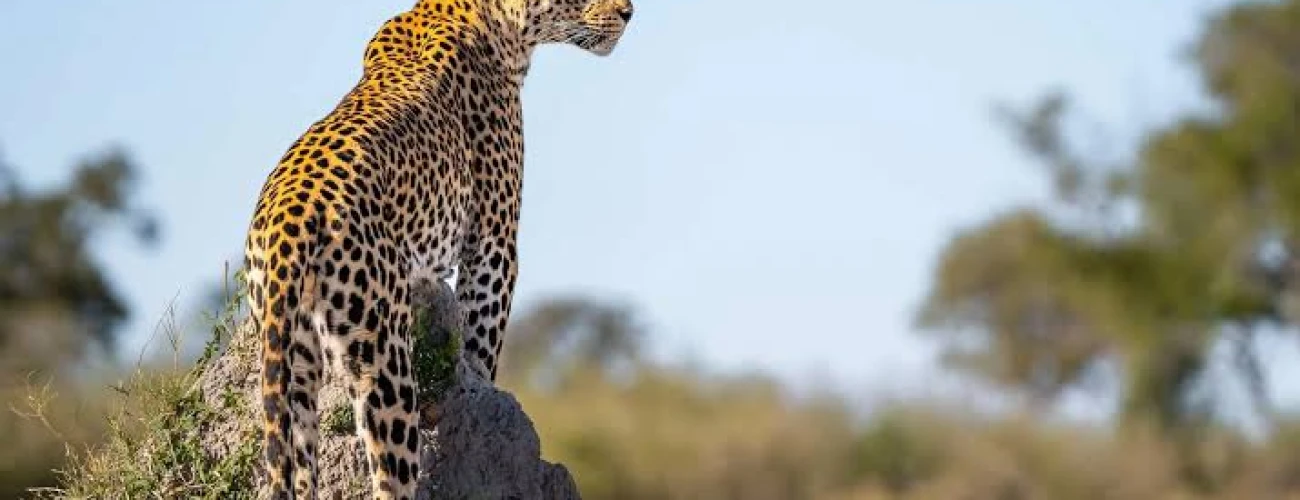
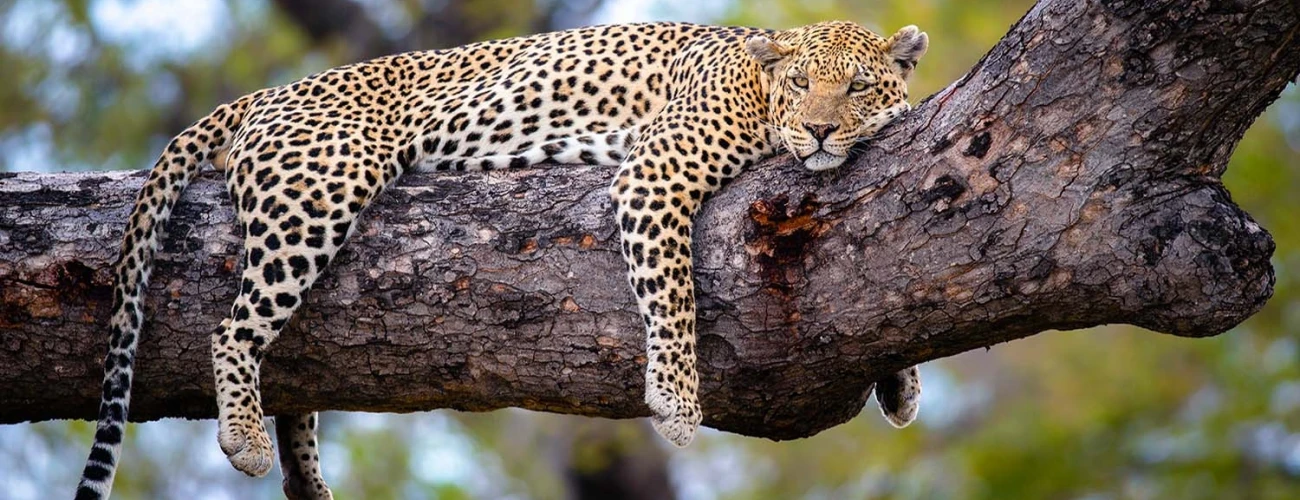
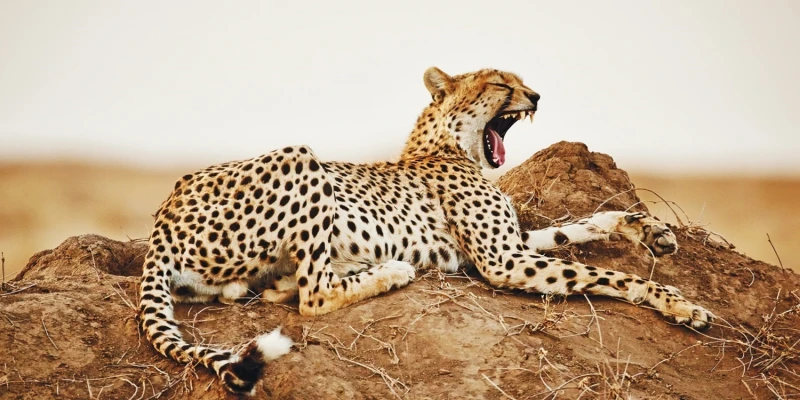
This season creates intense predator activity because lions, cheetahs, hyenas, and leopards remain close to the herds waiting for vulnerable prey.
The landscape during this period is lush and green due to seasonal rains, creating exceptional photography conditions.
Best for:
- Baby wildebeest and calving action
- Predator encounters
- Green landscapes and photography
- Cheetah sightings on open plains
April to May: Migration Movement and Green Season
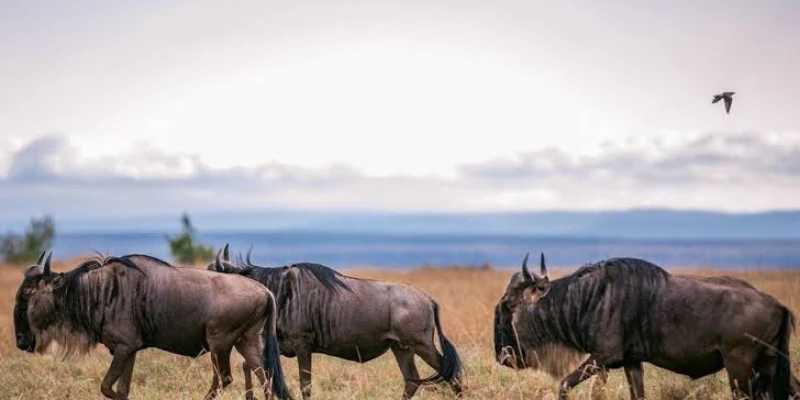
During April and May, the herds begin moving northwest as rainfall patterns shift across the ecosystem.
This period is part of the green season and is often underestimated by travelers. The plains remain beautiful and uncrowded, while migration herds continue moving in large numbers.
Rainfall can be heavier during these months, but wildlife density remains strong.
This is also one of the best times for travelers seeking:
- Fewer safari vehicles
- Lower accommodation rates
- Dramatic green scenery
- Quiet safari atmosphere
June to July: Grumeti River Crossings
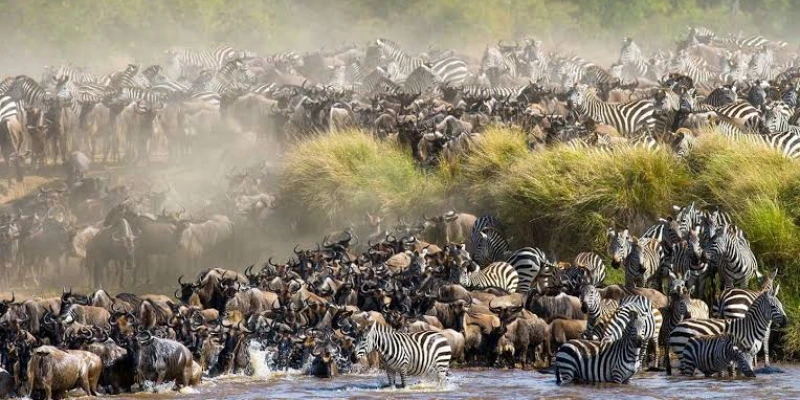
By June and July, the migration reaches the western corridor of the Serengeti.
Here, herds face the Grumeti River crossings, where crocodiles and predators wait along key crossing points. These crossings are dramatic, chaotic, and highly unpredictable.
This period also marks the beginning of the dry season, meaning wildlife visibility improves as grass becomes shorter and animals gather closer to water sources.
Best for:
- Early river crossing action
- Dry season game viewing
- Large migration herds
- Predator interaction near river systems
July to October: Northern Serengeti and Mara River Crossings
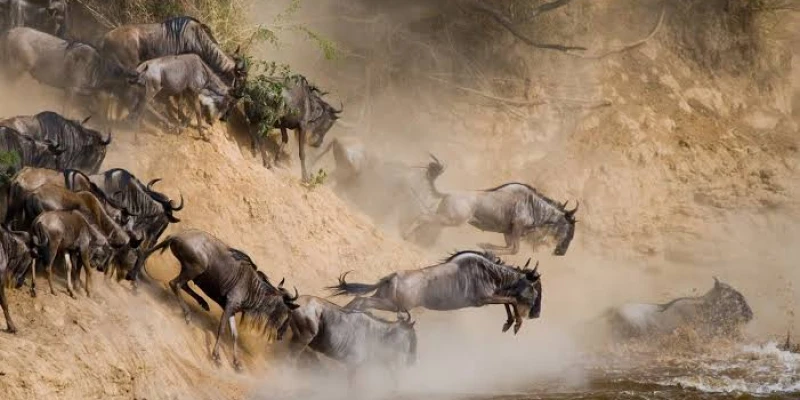
This is the most famous migration period and the time most associated with the Great Migration.
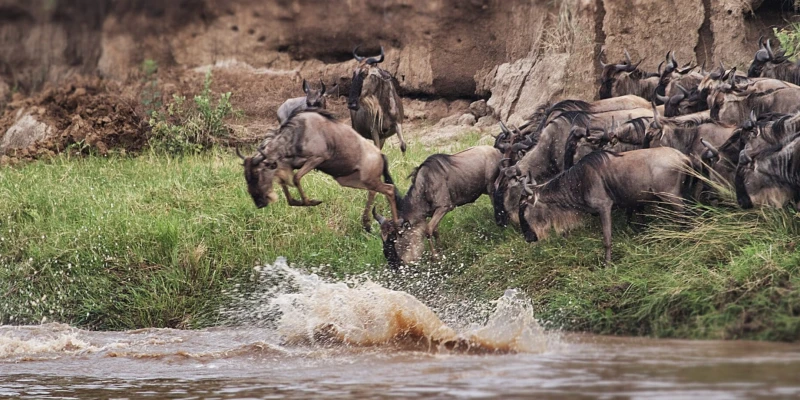
During these months, herds move toward northern Serengeti near the Mara River. River crossings become the defining experience of the safari.
Thousands of wildebeest gather along riverbanks before suddenly attempting dangerous crossings filled with strong currents and crocodiles. Some crossings happen quickly, while others can take hours of waiting before movement begins.
This is one of the most dramatic wildlife events in Africa.
The dry season conditions during this period also create excellent general game viewing across the Serengeti.
Best for:
- Mara River crossings
- Dramatic migration photography
- Dry season safaris
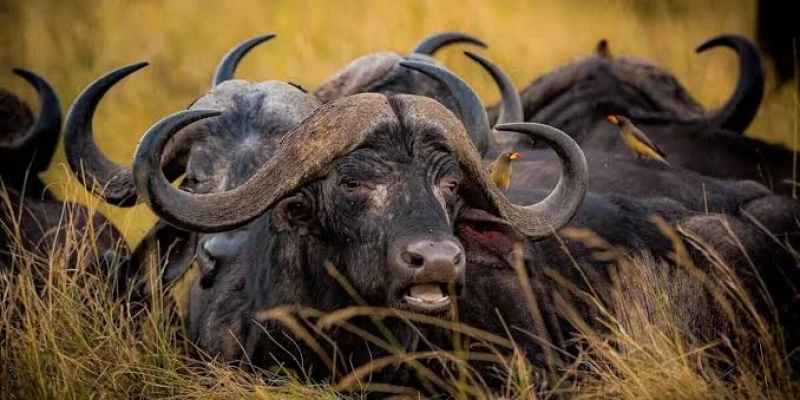
- Big Five encounters
- High predator activity
November to December: Return to Southern Serengeti
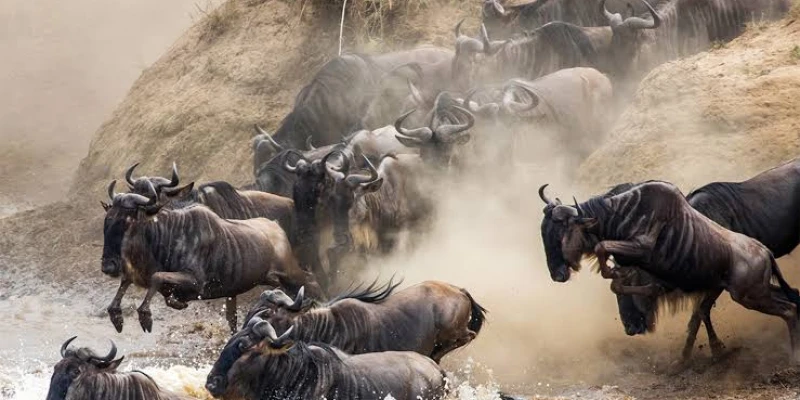
As short rains begin, the migration slowly moves back toward the southern plains.
This transition period is often overlooked, but it offers beautiful scenery, active wildlife movement, and fewer crowds compared to peak migration months.
Predators continue following the herds throughout the journey, maintaining strong wildlife activity across the ecosystem.
This period is ideal for travelers seeking a quieter migration experience without peak-season congestion.
The Migration Is More Than River Crossings
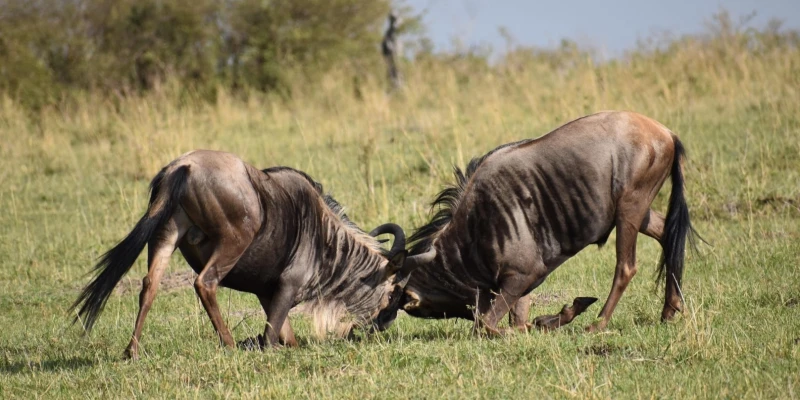
Many travelers think the migration is only about dramatic river crossings, but the experience is much broader than that.
The migration changes the entire ecosystem:
- Predator movement follows the herds
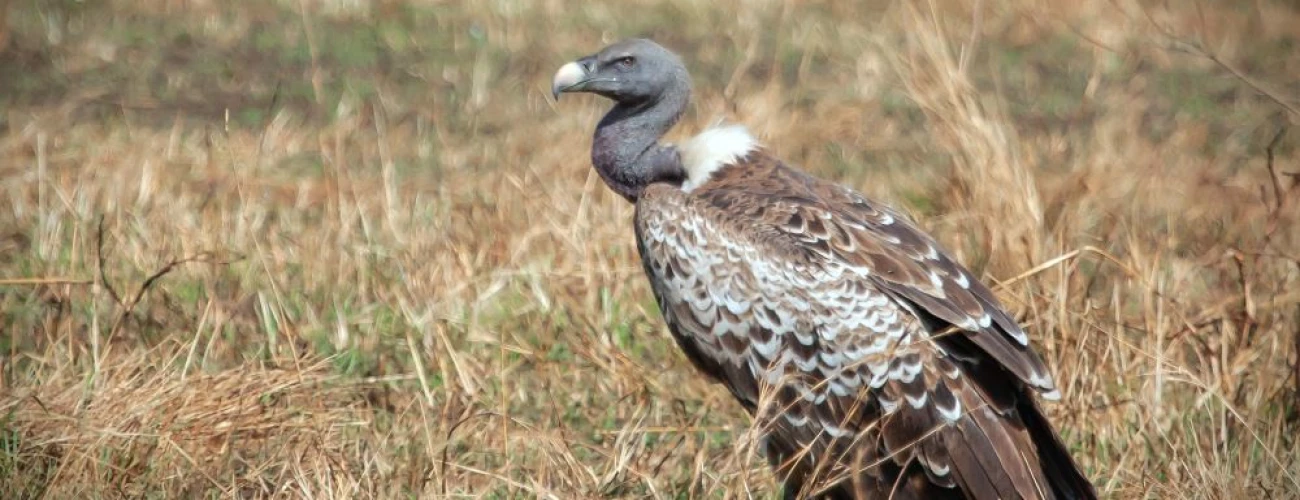
- Vultures and scavengers become more active
- Massive dust clouds rise across the plains
- Animal sound fills the landscape continuously
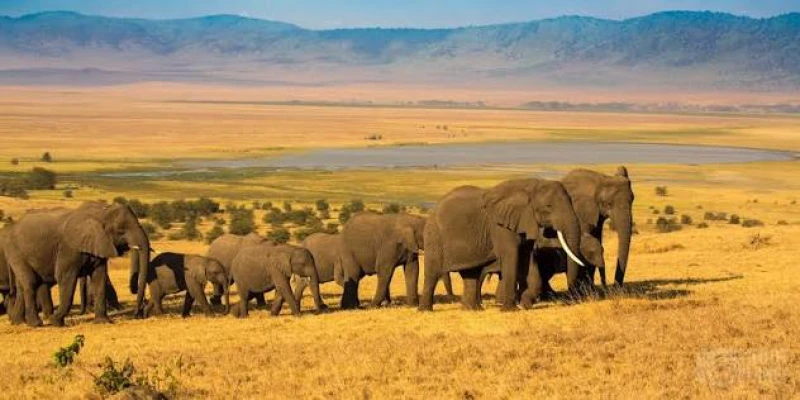
Even outside crossing periods, simply witnessing endless lines of wildebeest stretching toward the horizon is one of Africa’s most powerful safari experiences.
Balloon Safaris During Migration Season
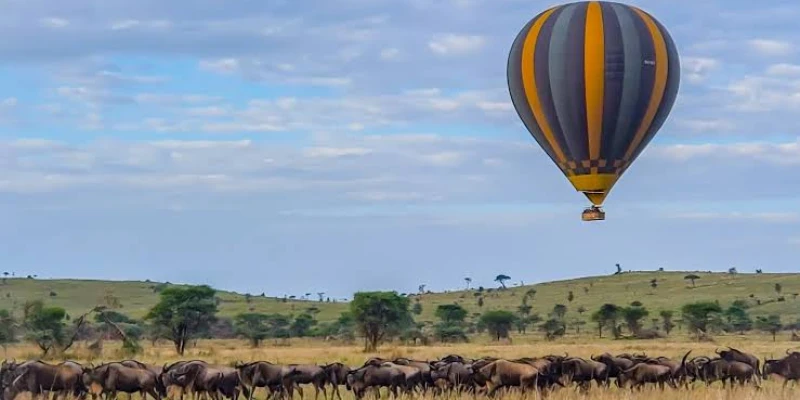
One of the most extraordinary ways to witness the migration is through a sunrise hot air balloon safari over the Serengeti.
From above, travelers can observe migration herds moving across the plains while predators navigate below. The aerial perspective reveals the true scale of the ecosystem in a way ground-level drives cannot fully capture.
Balloon safaris are especially spectacular during:
- Calving season in the southern plains
- Migration concentration in central Serengeti
- Northern movement during dry season months
This experience is often considered one of the highlights of a luxury Serengeti safari.
Choosing the Right Time Depends on the Experience You Want
There is no single “perfect” month for the migration because every stage offers different highlights.
- January–March: Calving and predator action
- June–July: Grumeti crossings and dry season visibility
- July–October: Mara River crossings and peak migration drama
- November–December: Returning herds and quieter safaris
The best safari is not based only on timing.it is based on matching the season to the type of wildlife experience travelers want most.The Great Migration is not a one-day event or a single location attraction. It is a continuous wildlife movement that transforms the Serengeti throughout the year.
Each season reveals a different side of the ecosystem calving, predator interaction, river crossings, or endless herd movement across open plains.
That constant movement is what makes the Serengeti one of the greatest safari destinations on Earth.
Discover More
Loved this safari story?
Join our exclusive list for luxury travel guides & hidden gems.